🏢 Understanding Commercial Real Estate Loans: A Complete Guide
When it comes to building wealth through property, commercial real estate (CRE) stands out as one of the most powerful investment vehicles. From office buildings and retail spaces to apartment complexes and industrial warehouses — these income-generating assets often require large-scale financing. That’s where commercial real estate loans come into play.
In this blog, we’ll break down what commercial real estate loans are, how they work, and what you need to know before applying for one.
📘 What Are Commercial Real Estate Loans?
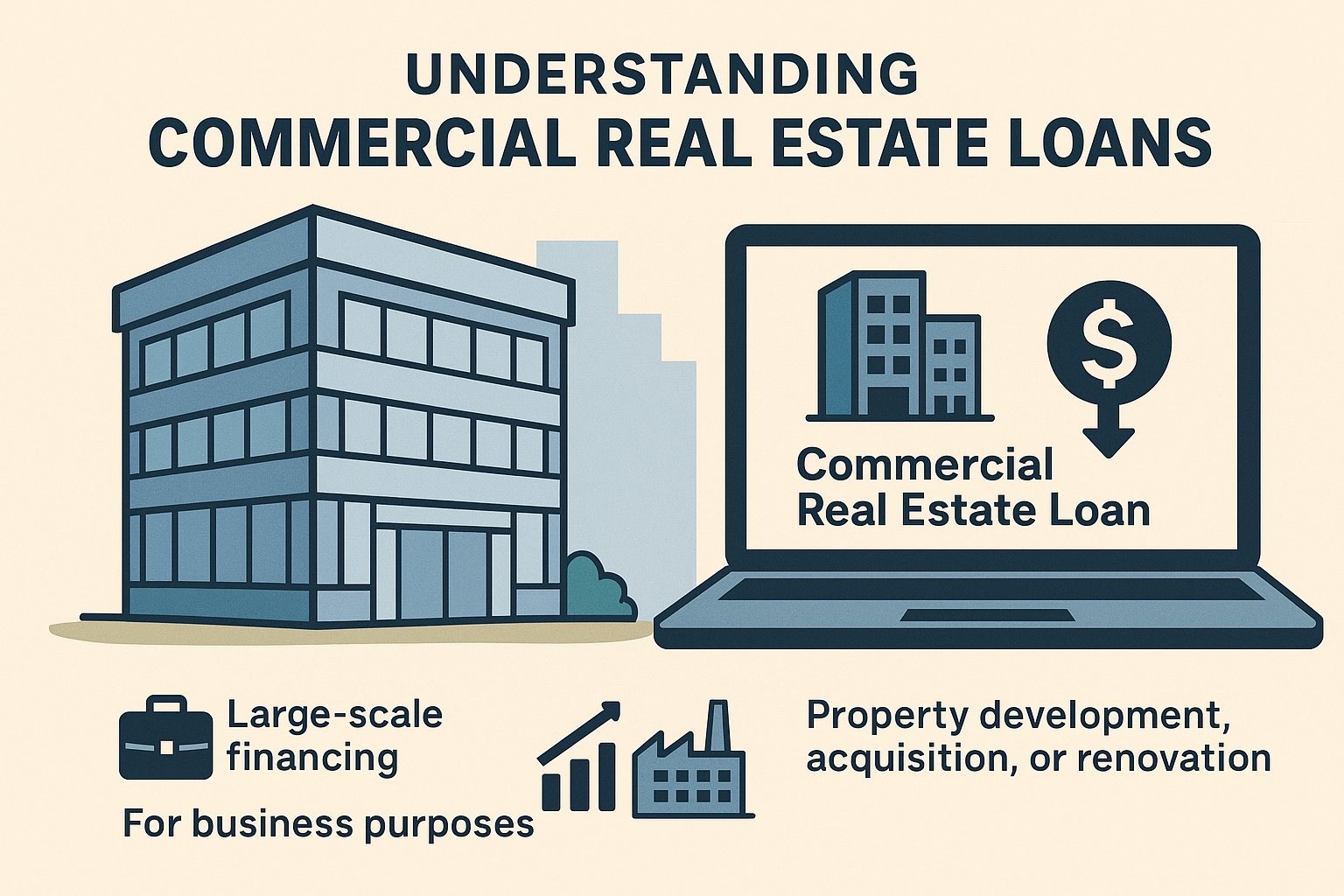
A commercial real estate loan is a type of mortgage secured by a commercial property, such as an office, shopping center, or multifamily housing unit. Unlike residential loans, which are designed for individuals buying homes, CRE loans are meant for business purposes — such as property development, acquisition, or renovation.
These loans are typically offered to:
- Business owners looking to buy or expand premises
- Investors developing or refinancing properties
- Real estate developers constructing commercial projects
💼 Types of Commercial Real Estate Loans
Not all commercial loans are created equal. Depending on your business needs and financial goals, there are several options available:
1. Traditional Commercial Mortgages
These are offered by banks and credit unions, similar to home mortgages but with stricter requirements. They usually come with:
- Loan terms of 5–20 years
- Fixed or variable interest rates
- 20–30% down payment
2. SBA (Small Business Administration) Loans
Backed by the U.S. government (like SBA 504 and SBA 7(a) loans), these are ideal for small businesses. Benefits include:
- Lower down payments (as low as 10%)
- Long repayment terms (up to 25 years)
- Competitive interest rates
3. Bridge Loans
Short-term financing designed to “bridge” the gap until permanent funding is secured. ✅ Best for: Quick purchases or renovation projects. ⚠️ Downside: Higher interest rates and shorter terms (6–36 months).
4. Hard Money Loans
Funded by private lenders instead of banks. ✅ Best for: Investors with limited credit history. ⚠️ Downside: High rates and fees — meant for short-term use only.
5. Construction Loans
Used to finance building projects from the ground up. Lenders release funds in stages as the project progresses. Once construction is complete, these can be converted into permanent mortgages.
🧮 How Do Commercial Real Estate Loans Work?
While residential mortgages often rely heavily on personal income and credit, commercial loans primarily evaluate the property’s potential to generate income.
Here’s how lenders usually assess a deal:
-
Loan-to-Value (LTV) Ratio
- Measures the loan amount vs. the property’s appraised value.
- Typical LTV: 65%–80%
-
Debt Service Coverage Ratio (DSCR)
- Indicates whether the property’s income can cover loan payments.
- DSCR = Net Operating Income / Annual Debt Payments
- A DSCR of 1.25 or higher is preferred.
-
Creditworthiness and Experience
- Lenders check business credit scores, financial statements, and the borrower’s real estate experience.
-
Collateral
- The property itself acts as collateral. If the borrower defaults, the lender can seize it.
🏦 What Are the Typical Loan Terms?
| Feature | Commercial Loan | Residential Loan |
|---|---|---|
| Loan Term | 5–20 years | 15–30 years |
| Amortization | May extend beyond loan term | Matches loan term |
| Interest Rate | Higher (due to business risk) | Lower |
| Down Payment | 20–30% | 5–20% |
| Approval Time | 30–90 days | 15–45 days |
⚠️ Common Challenges in Getting Approved
Even strong businesses can face roadblocks when applying for commercial real estate financing. Common hurdles include:
- Insufficient business history or credit
- Low property appraisal
- Incomplete documentation
- High-risk business sectors
To improve your chances: ✅ Maintain strong business credit ✅ Prepare detailed financial records ✅ Have a clear property income projection
💡 Tips for Choosing the Right CRE Loan
- Know Your Goals – Are you buying, refinancing, or building?
- Compare Lenders – Banks, credit unions, and private lenders all have different criteria.
- Understand the Costs – Factor in origination fees, appraisal fees, and closing costs.
- Negotiate Terms – Even in commercial lending, rates and terms can often be negotiated.
- Seek Expert Help – A commercial mortgage broker can help you find the best fit.
🏁 Final Thoughts
Commercial real estate loans can open the door to lucrative investment opportunities, but they require careful planning and due diligence. Understanding loan structures, interest terms, and financial ratios will help you make smarter decisions — and ultimately, grow your business portfolio with confidence.
Whether you’re a small business owner or a seasoned investor, mastering how CRE loans work is the first step toward turning commercial properties into long-term profit.